

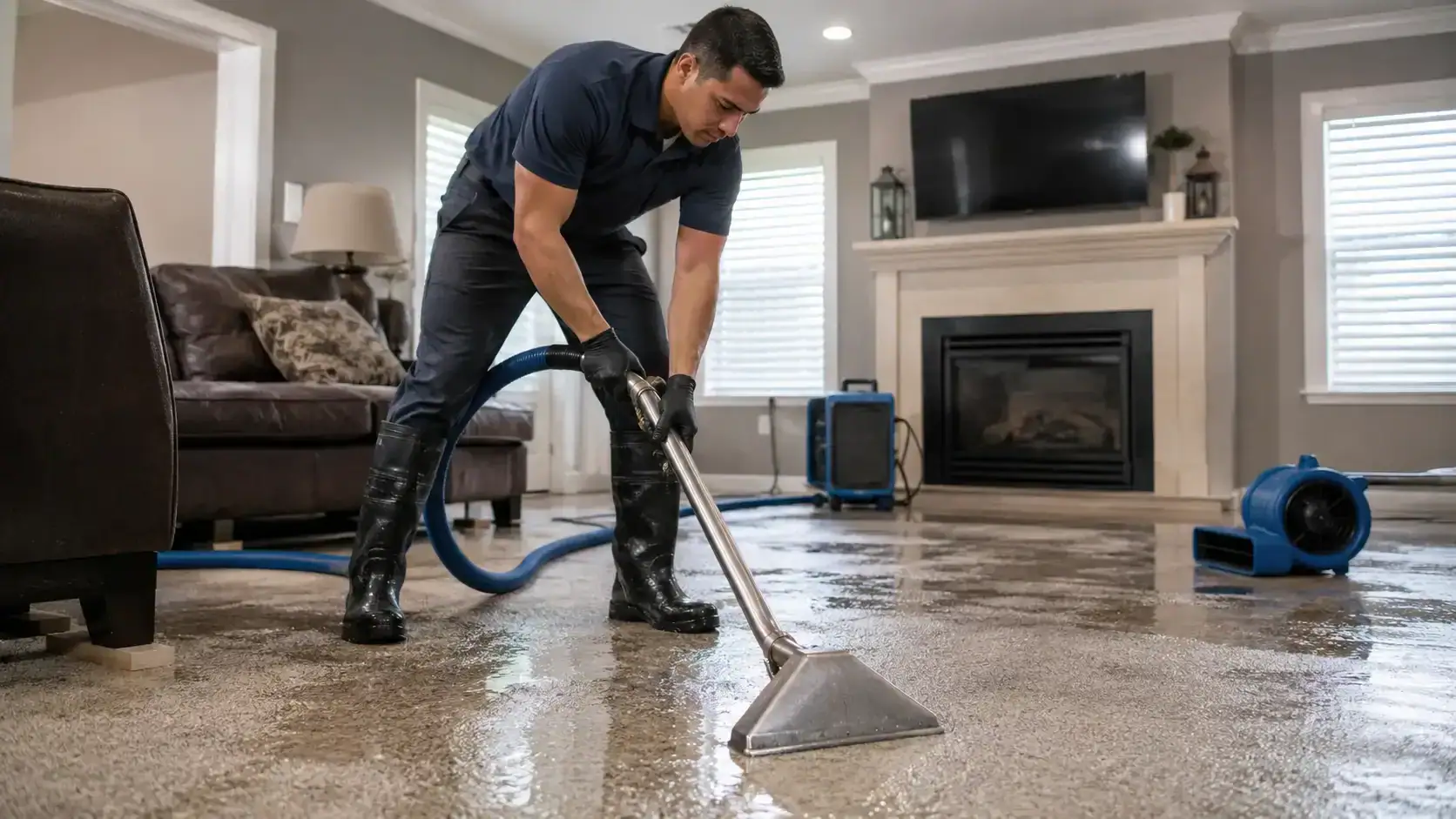
Carpet Flooded in Chicago? Here’s What to Do in the First 24 Hours
A dishwasher line lets go overnight. A toilet overflows. A storm forces water under the back door. A neighbor upstairs has a leak. The first thing most Chicago homeowners do is grab towels. The smart move is to do both at once, and call for help in the first hour. The 24-hour window after a carpet flood decides whether the carpet survives or becomes a tear-out. Carpet Cleaning Group’s water damage team answers the phone 24/7 with a 60-minute response time in the Chicago area.
First 15 Minutes: Safety First
Before anything else:
- Cut the source. Shut off the water valve or main, kill the dishwasher, stop the leak if you can do it safely. If the source is upstream (upstairs neighbor, roof, foundation), call the building or shut off your own supply.
- Cut the power to the affected room at the breaker if water has reached outlets, cords, or electronics. Standing water plus power is the most common cause of household injury in a flood.
- Move what you can. Lift soft furniture off the wet carpet. Get rugs and electronics out of the way.
- Document everything. Take phone photos and videos before you do any cleanup. Insurance companies need timestamped before-images.
If the Water Is Clean: Move Fast
Clean water means a fresh supply line, dishwasher overflow, or rainwater (not floodwater). For this category, fast action saves the carpet:
- Extract standing water with a wet/dry vacuum if you have one. Towels for smaller amounts.
- Lift the carpet edges if you can do it without damage. Air underneath dries the padding faster.
- Run fans and a dehumidifier. Open windows if outdoor humidity is lower than indoor.
- Lift wet furniture or put foil under the legs to prevent stain transfer.
If the affected area is larger than one room, or there is more than half an inch of standing water, or there’s any contamination, this is where you call (773) 570-4224 right now. Speed matters more than perfection.
The 48-Hour Mold Window
Per EPA on mold and moisture, mold can begin to grow within 24 to 48 hours of materials staying wet. Carpet padding holds moisture much longer than the carpet itself. What looks dry on top can stay damp underneath for days. Once mold establishes in the padding, the only fix is removal and replacement. This is the single biggest reason to bring in a professional response within hours, not days.
How Carpet Cleaning Group Responds
Our water damage carpet restoration in Chicago runs 24 hours a day, 7 days a week. When you call, here’s what happens:
- Phone triage. We confirm location, scope, water type (clean, gray, or black), and timing. We dispatch a team.
- 60-minute average response inside the Chicago area. Longer for far-out suburbs.
- On-site assessment. Water extraction with truck-powered equipment, moisture meter readings on carpet, padding, and subfloor.
- Decision: dry in place vs. pull and replace. We are honest about which path makes sense for your specific situation.
- Drying with air movers and commercial dehumidifiers. Usually 3 to 5 days of monitored drying.
- Insurance documentation. Photos, moisture logs, scope of work. We work directly with insurance companies and know what documentation each major insurer needs.
- Post-dry cleaning and antimicrobial treatment.
Our process follows IICRC S500 water damage standard, the industry framework for water damage restoration.
When to Pull and Replace Instead
Some situations make replacement the better call from the start:
- Contaminated water (sewage backup, outside floodwater, gray water more than 48 hours old). The carpet and padding cannot be safely restored.
- Carpet that has been wet for more than 48 hours. Padding is usually past saving.
- Standing water deeper than 2 inches across most of a room.
- Carpet over 10 years old where the value of restoration exceeds the cost of replacement.
- Hardwood subfloor showing visible water damage.
We tell you which scenario you’re in after the on-site assessment. There’s no upselling on something that can’t actually be saved.
What Not to Do
Three actions make a flood worse:
- Don’t turn the heat up to dry the carpet faster. Heat plus moisture accelerates mold growth and can felt wool fibers.
- Don’t use a household vacuum on standing water. It’s not built for it and the motor can be damaged or cause electrical issues.
- Don’t wait until morning if the flood happens overnight. The first hours matter most.
What Comes After the Water Is Out
Even with fast response, water-damaged carpet sometimes needs a follow-up: a deep clean to remove residual sediment, antimicrobial treatment, and sometimes odor removal. Lingering smell after a flood is usually a sign of moisture still in the padding or subfloor. We cover this in our guide on musty smell removal.
Hours and How to Reach Us
We are open and answering the phone:
- Monday–Friday: 8:00 AM – 8:00 PM
- Saturday: 8:00 AM – 5:00 PM
- Sunday: closed
Call (773) 570-4224 or email contact@carpetcleaningchicagoccg.com. Free, no-obligation estimates. Same-day service is sometimes available when we have an opening — call to ask. We back our work with a 100% satisfaction guarantee: if you aren’t happy with the results, we come back and make it right.
Minimum service order is $180. We charge no fuel or parking fee. Credit card payments have a 3.7% processing fee, or pay by cash or check to avoid it.
Frequently Asked Questions
How fast can you respond to a carpet flood in Chicago?
60 minutes average response inside the Chicago area when you call (773) 570-4224. Longer for outer suburbs. Our water damage team operates 24 hours a day, 7 days a week, including holidays.
Do you work directly with insurance companies?
Yes. We document everything for the claim: photos, moisture meter readings, scope of work, daily drying logs. We’ve worked with every major insurance company and know what documentation each needs. You won’t need to coordinate between us and your adjuster.
Can flooded carpet really be saved?
Often yes, if we get there within 24 to 48 hours and the water is clean. We measure moisture levels in the carpet, padding, and subfloor to make that call honestly. If padding has to be replaced, we say so before starting.
Do you handle sewage backups or contaminated water?
We extract and dispose of contaminated carpet and padding per IICRC S500 standards, but we do not attempt to restore Category 3 (black) water-damaged carpet. The carpet must be removed and the subfloor properly sanitized before new carpet goes down.
How long does drying take?
Typically 3 to 5 days of monitored drying with air movers and commercial dehumidifiers. We take moisture readings daily and adjust the equipment until the carpet, padding, and subfloor are confirmed dry.
Don’t Wait — Call Now
Every hour the carpet stays wet, the odds of saving it drop. Call (773) 570-4224 now. We are family-owned and have been a Chicago carpet cleaner since 2014, with 24/7 water damage response covering our service area across the city and surrounding suburbs.