

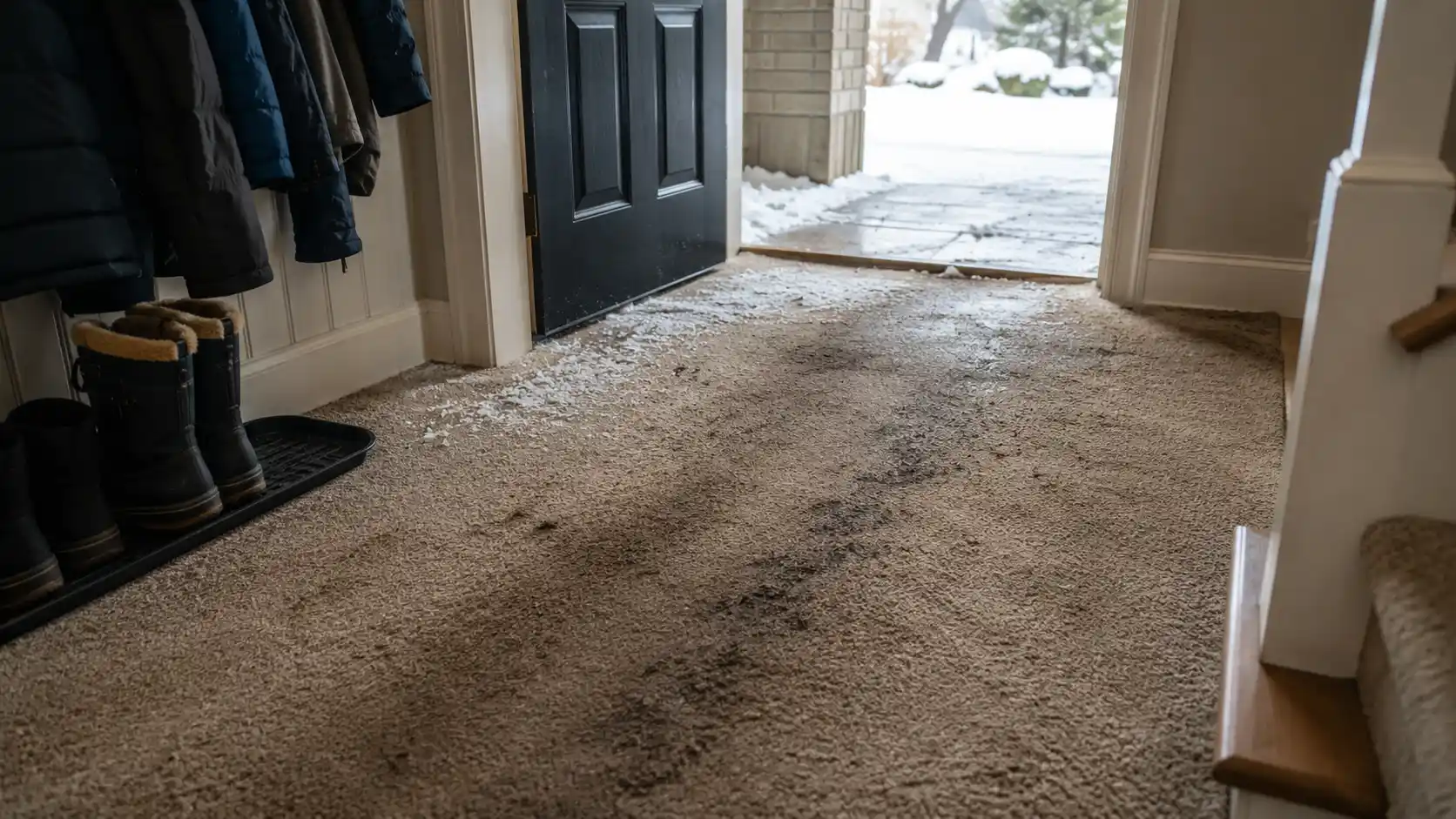
What Chicago Winter Salt Is Actually Doing to Your Carpet
By the end of February, every Chicago entryway has it: that white crust along the inside threshold, the dull patch where boots come off, the gritty feel you notice when you walk barefoot. Winter salt is brutal on carpet, and not just because it looks bad. The chemistry is actively damaging fibers in three specific ways. At Carpet Cleaning Group, we are a family-owned cleaner in Chicago since 2014. Spring is our busiest season for exactly this reason.
Three Forms of Salt, Three Types of Damage
Chicago uses three deicing materials, each with different effects on carpet:
- Rock salt (sodium chloride). The cheapest and most common. Coarse crystals that grind into carpet fiber as you walk. Mineral residue dulls color and traps additional soil.
- Calcium chloride. The aggressive one. Works at lower temperatures than rock salt. It’s hygroscopic, meaning it pulls moisture out of the air, leaving an oily residue on carpet that attracts and bonds with new soil.
- Magnesium chloride. Increasingly common as a “safer” option. Less corrosive than calcium chloride, but still hygroscopic and still leaves residue.
How Each Damages Carpet
- Mechanical abrasion. Salt crystals act as fine sandpaper inside the fiber. Every footstep grinds them deeper, cutting the fiber from the base of the pile. This is the primary cause of “traffic lane” wear in Chicago carpet.
- Chemical residue. Calcium chloride and magnesium chloride leave hygroscopic residue that never dries out. The carpet feels gritty or sticky long after the visible salt is gone.
- Soil bonding. The chloride residue acts as an adhesive for new soil. Once a section of carpet has chloride residue in it, it gets dirty faster than the surrounding carpet.
- Color damage. The combination of salt mineral and acidic shoe debris dulls and discolors carpet, especially on light colors and high-end fiber.
Why Vacuuming Alone Isn’t Enough
Standard household vacuums can pick up the loose surface crystals, but they can’t remove the dissolved chloride residue that has bonded to the fiber. That residue is the actual long-term damage. Vacuuming makes the carpet look better while the chemistry continues to work underneath.
Why Professional Cleaning Works
Per IICRC carpet cleaning standards, chloride residue requires neutralizing chemistry, not just water. Our hot water extraction:
- Pre-treats traffic lanes with a chloride-specific neutralizer that breaks the bond between the residue and the fiber
- Hot water dissolves the dissolved-but-bonded salt mineral that vacuuming can’t reach
- High-suction extraction pulls the dissolved residue out of the fiber and padding
- A neutral-pH rinse prevents future re-soiling
The difference shows up immediately. The carpet color comes back. The gritty feel goes away. The soil-bonding effect breaks, so the carpet stays cleaner longer.
Entryway Strategy
Most salt damage happens in the first 6 feet of carpet inside an entryway. Strategies that actually work:
- Two-mat system. A coarse outdoor mat to knock loose debris off, plus an absorbent indoor mat that captures wet salt before it reaches carpet.
- Boot removal station. Bench or shoe rack right at the door. Cuts indoor salt by 70 to 80 percent.
- Hardwood or tile entry. If you’re renovating, replacing carpet in the first 4 to 6 feet with hardwood or tile eliminates the problem zone entirely.
If you have tile or hardwood at the entry, tile and grout cleaning in spring removes the salt deposits that have built up over the winter season.
DIY Mid-Winter Damage Control
Between professional cleanings, you can slow the damage:
- Vacuum entryway carpet two to three times a week during salt season. Use a slow pass.
- Diluted vinegar spray on visible salt rings. About one part white vinegar to three parts water. Blot, don’t rub. Test on a hidden area first; some carpet dyes react to vinegar.
- Don’t use rental machines mid-winter. Cold weather plus over-wetting equals mildew.
- Keep entryway carpet dry. If it’s wet, blot it with white towels and let it air-dry. Wet salt residue does the most damage.
Hours and How to Reach Us
We are open and answering the phone:
- Monday–Friday: 8:00 AM – 8:00 PM
- Saturday: 8:00 AM – 5:00 PM
- Sunday: closed
Call (773) 570-4224 or email contact@carpetcleaningchicagoccg.com. Free, no-obligation estimates. Same-day service is sometimes available when we have an opening — call to ask. We back our work with a 100% satisfaction guarantee: if you aren’t happy with the results, we come back and make it right.
Minimum service order is $180. We charge no fuel or parking fee. Credit card payments have a 3.7% processing fee, or pay by cash or check to avoid it.
Frequently Asked Questions
[H3] When should I have carpet cleaned after the salt season ends?
April is ideal. By then, the salt-and-slush is done but the residue is still active in the fiber. Waiting until summer means the damage continues all spring. Spring is our busiest season for this reason; book 1 to 2 weeks ahead.
Does vinegar damage carpet?
Diluted vinegar (1 part vinegar to 3 parts water) is generally safe on synthetic carpet for spot cleaning. Test on a hidden area first. Undiluted vinegar can damage dyes on wool or natural-fiber rugs. Avoid vinegar entirely on wool oriental rugs.
Can salt damage be fully reversed?
Mostly yes if treated within the first year. The mineral residue and chemical bonding come out with professional treatment. Color usually returns close to original. Mechanical abrasion (fiber wear from years of foot grinding) is permanent; only the chemical and residue damage are reversible.
Do you offer same-day spring carpet cleaning in Chicago?
Sometimes yes when we have availability, but spring is our busiest season. Book 1 to 2 weeks ahead in April and May. Outside the peak, same-day or next-day is sometimes possible. Call (773) 570-4224 to check current availability.
Are your products safe for kids and pets?
Yes. We use non-toxic, family-safe solutions on every job. Carpet is safe for kids and pets once it is dry, typically 6 to 12 hours after the appointment.
Book a Post-Winter Spring Cleaning
Call (773) 570-4224 or contact us. We work across the city, including Lincoln Park winter cleanup and the broader north side.