

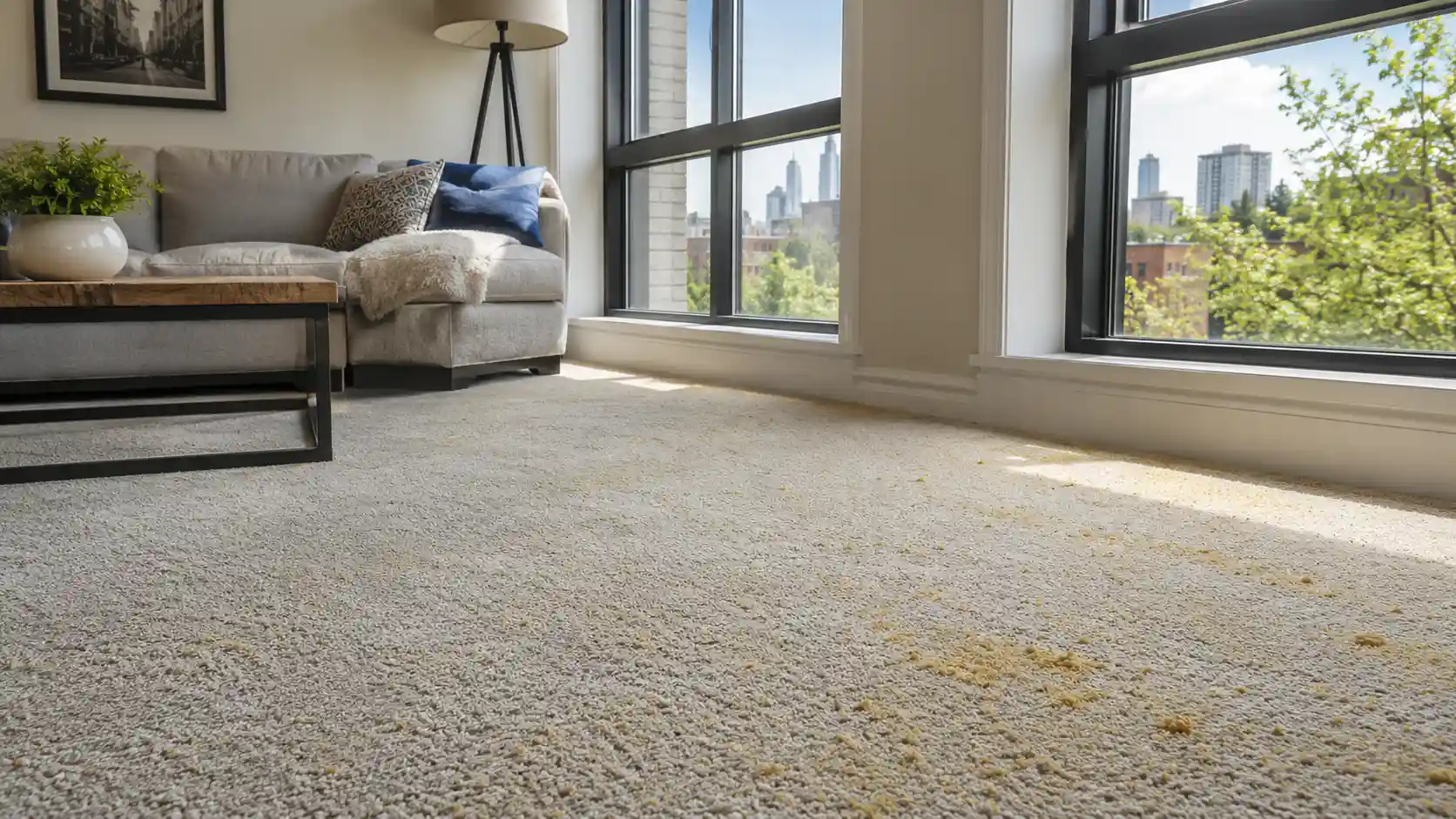
Chicago’s Spring Allergy Season Is Hiding in Your Carpet
If you find yourself sneezing the moment you step inside after a walk through Lincoln Park or the Lakefront Trail this May, the carpet under your feet is part of the story. Tree pollen runs heavy in Chicago from March through May. A lot of it gets tracked indoors and settles into carpet fibers, where it stays until something disturbs it. This post explains why spring is the worst time for indoor allergens in local homes, and what professional carpet cleaning in Chicago does about it.
Chicago’s Pollen Calendar, Briefly
Tree pollen dominates Chicago’s spring. Oak, maple, birch, ash, and elm are among the heaviest contributors. According to Pollen Tracker, tree pollen peaks in March and April, and grass pollen takes over from mid-May through July. April and May are the overlap window, when tree pollen is still active and early grass pollen begins to rise. Pollen counts run highest in the morning and midday and ease in the evening.
Chicago’s geography makes it worse. Wind off Lake Michigan carries pollen long distances into neighborhoods with fewer trees. Once that pollen lands on shoes, jackets, and pets, it ends up on the floor.
What Your Carpet Catches
Carpet acts as a passive filter for the air in your home. According to the American Lung Association, carpets and rugs may trap dust mites, pet dander, cockroach allergens, particle pollution, lead, mold spores, pesticides, dirt, and dust. Tree pollen tracked in from outside settles on top of all of that.
That filtering only helps when carpets get cleaned regularly. When they don’t, the carpet becomes a reservoir, and vacuuming, foot traffic, and even moving furniture stir those particles back into the air. Allergy season gets worse when you ignore the risks of skipping carpet cleaning.
Three things make spring particularly bad for local carpets. First, pollen comes in through open windows during the first warm days of April. Second, shoes carry it in after walks, and once it is in the fibers, it lingers. Third, Chicago homes spend roughly five months sealed up for winter, so dust mites and pet dander accumulate without fresh air exchange.
Why Spring Is the Worst Time for Indoor Allergens
The first warm weekend in April is usually the trigger. Windows open. A few weeks later, the carpet that looked fine all winter is loaded with new tree pollen on top of the dust and dander that have been there since November. You can read more about how carpet cleaning helps allergies in our dedicated guide.
Dust mites are the other half of the problem. They feed on shed skin cells and live in carpets, upholstery, and bedding year-round. Their waste is a common allergen.
What Professional Cleaning Removes
Vacuuming, even with a HEPA filter, only reaches the top layer of carpet. Hot water extraction, the method most people call steam carpet cleaning, pushes hot water and cleaning solution deep into the pile under pressure, then pulls the dirty water back out. It removes embedded soil, pollen, dander, and dust mite waste that vacuuming misses. The IICRC, an industry standards body for cleaning and restoration, sets the technical guidelines reputable cleaners follow.
Realistic expectations matter. Professional cleaning meaningfully reduces the allergen load in your carpet. It does not eliminate allergies, and it does not replace the other things you should be doing. Think of it as one piece of a broader plan.
What You Can Do at Home
The Asthma and Allergy Foundation of America recommends a layered approach for indoor allergens. That means vacuuming carpets weekly with a HEPA filter, controlling humidity to slow dust mites, keeping pets out of bedrooms, changing HVAC filters regularly, and scheduling professional carpet cleaning periodically.
For Chicago homes, the practical schedule is:
- Vacuum twice a week through spring and fall when allergen levels are highest.
- Take shoes off at the door. This is the simplest and most effective change you can make.
- Keep windows closed in the morning and midday on high-pollen days. Open them in the evening when counts drop.
- Schedule professional cleaning before or after the spring peak, and again in late fall before sealing up for winter.
Frequently Asked Questions
Does carpet make allergies worse?
It depends on how it is maintained. Dirty, neglected carpet acts as a reservoir for allergens that release back into the air. Clean carpet, vacuumed weekly and professionally deep cleaned periodically, traps allergens at floor level rather than letting them circulate.
How often should I clean carpets if I have allergies or asthma?
Carpet manufacturers generally recommend professional cleaning every 12 to 18 months for typical homes. Households with allergy or asthma sufferers, pets, kids, or heavy foot traffic should clean more often, often every 6 to 12 months. Our team can suggest a schedule based on your situation.
Will carpet cleaning remove all the pollen from my home?
No. Professional cleaning reduces what is trapped in your carpet, but pollen keeps coming in on shoes, clothing, pets, and through open windows. Combine cleaning with HEPA vacuuming, air filtration, and a shoes-off habit at the door for the best results.
Are the products you use safe for people with allergies?
Yes. We can use low residue, low fragrance cleaning solutions for households with allergy sensitivities. Mention it when you book. We also follow proper rinsing protocols, because under rinsed detergent residue can itself trigger sensitivity.
How long should I wait before walking on cleaned carpet?
Generally 6 to 12 hours for full drying after hot water extraction. Walking on it before then can flatten fibers and re soil the surface. Wear clean white socks if you have to walk on it sooner.
Booking a Spring Cleaning
If your home is full of sneezes and your carpet has not had a deep clean since fall, this is the right time. We are a family-owned carpet cleaner in Chicago, family-owned since 2014, working out of 3652 N Milwaukee Ave on the Northwest Side. Call us at (773) 570-4224 for a quote.