

- Home
- Cushion Cleaning in Chicago
Cushion Cleaning in Chicago: Fresh, Odor-Free Furniture Without the Guesswork
Signs Your Cushions Need Professional Attention
Most folks wait too long. That’s just the truth of it. By the time you call us, the cushion’s usually been bugging you for months.
Here’s what we hear on the phone almost every week. A cushion that looked fine in the store now has a dark ring where somebody’s head rests every night. Or the arm of the couch has that dull, greasy shine from hands and lotion over time. Sometimes it’s a smell that won’t quit, even after you’ve sprayed it three different ways.
A few things tell us a cushion needs real cleaning, not just a wipe down:
- Dark or shiny patches on the seat, back, or arms where people sit most often
- A musty or sour smell that comes back after airing the room out
- Visible stains that didn’t fully lift with a home cleaner or spot treatment
- Cushions feel stiff, matted, or the fabric looks flat compared to the rest of the piece
- Anyone in the house has started sneezing more near the couch or recliner
That last one catches people off guard. Cushions trap dust, pet dander, and skin cells way down in the foam, not just on the surface. You can vacuum all day and never touch it.
Pet owners have their own version of this. The cushion looks clean, but the second it gets warm or a little damp, that urine smell comes right back. That’s not a cleaning problem you fix with fabric spray. It’s sitting deep in the padding.
Cushion Cleaning vs. Re-Stuffing: What Each One Fixes
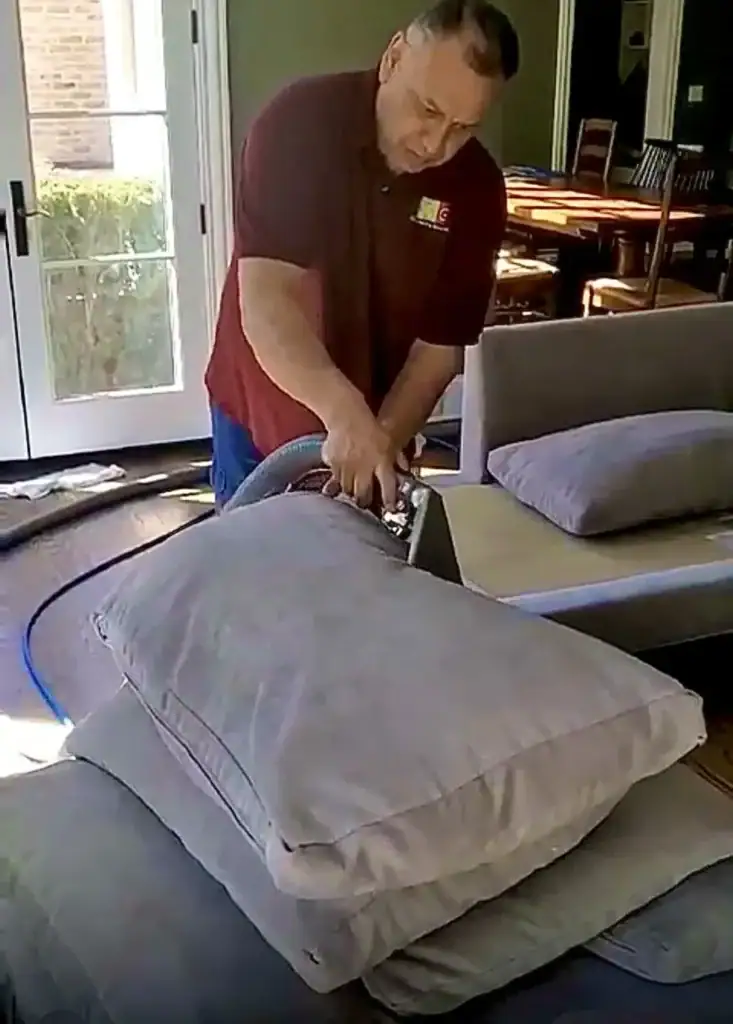
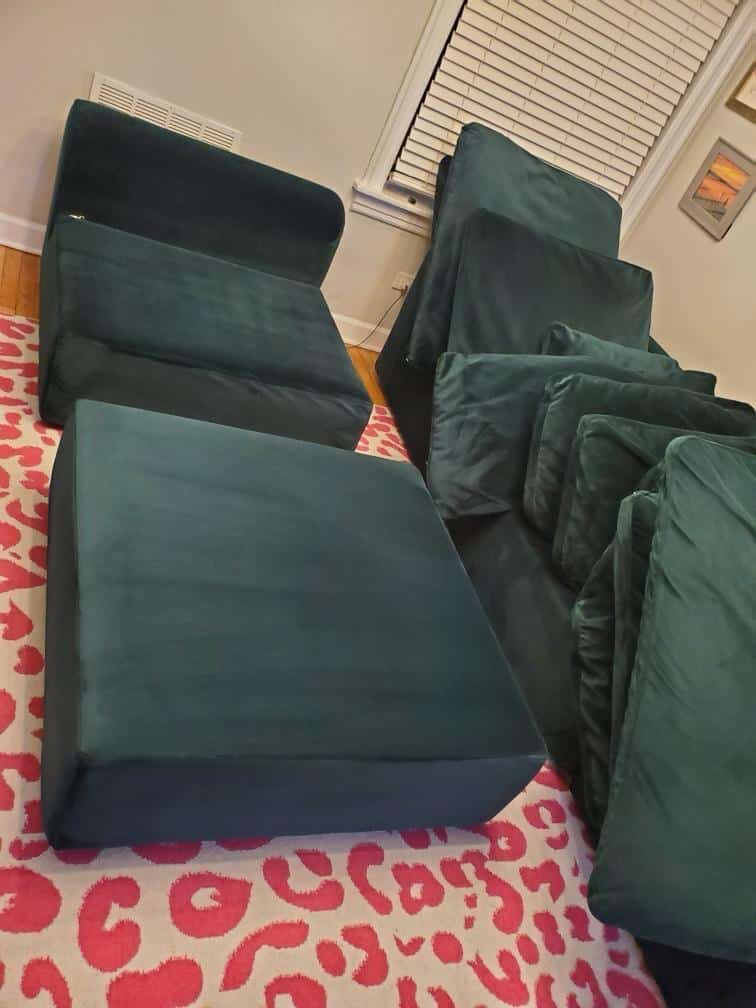
These are two different jobs, and mixing them up wastes money. Cushion cleaning fixes what’s on the surface and inside the fabric: sweat, body oil, pet dander, dust mites, old spills. It pulls that stuff out and knocks down the smell that comes with it. Re-stuffing is a different job. That’s about the foam or filling inside going flat, lumpy, or breaking down after years of use.
We get calls all the time from folks who think their cushions need to be replaced when really they just need a good clean. Most of the time it’s the same thing: the cushion looks gray and tired, but the foam underneath is fine. Once we steam clean it and pull the dirt out, the fabric brightens up and the smell is gone. No need to open anything up.
Here’s how to tell which one you need. If the cushion still bounces back when you press it and holds its shape, cleaning will do the job. If it stays flattened, sags in the middle, or you can feel lumps through the fabric, that’s a filling problem. Cleaning won’t fix sagging foam. That’s a structural issue, not a dirt issue.
Chicago winters make this worse. Radiator heat dries out foam faster than you’d think, and a lot of vintage two-flats and walk-ups still have older cushions that were never swapped out. So the foam breaks down while the fabric on top still looks salvageable.
Our cushion cleaning service handles the dirt, the odor, and the allergens. It won’t rebuild foam that’s already shot. Knowing which problem you’ve got before you spend money is half the battle.
What Happens During a Cushion Cleaning Visit
Here’s what happens when we show up. First we check every cushion, front and back. Cushions in Chicago condos take a beating from radiator heat and dry winter air, which dries out fibers faster than most people expect. We look for zippers, loose seams, and any spot where the filling has shifted.
We test the fabric before touching it with anything wet. Not every cushion cover can handle water. Some older velvet pieces and vintage chairs need a dry method instead. Skip this step and you risk shrinking or discoloring the fabric permanently.
- We vacuum every cushion top, bottom, and the crevices where crumbs and pet hair collect.
- We pre-treat stains, pet spots, and any areas with body oil buildup from regular use.
- We agitate the fabric gently to loosen dirt trapped deep in the weave.
- We use hot water extraction on cushions that can safely take it, pulling out the dirty water right along with the cleaning solution.
- We set fans on the cushions so they dry fast, since damp cushions left too long can start to smell musty.
That drying step matters more in Chicago than people think. A humid August afternoon slows drying way down compared to a dry January day. We plan for that and bring fans on every job.
Most cushions feel dry to the touch within a few hours. Full dry-through can take longer depending on the fill type. Down-filled cushions hold moisture longer than foam. That’s just how the material works.
We clean with Green Seal certified solutions on every visit. No harsh chemical smell left behind, no residue that attracts dirt faster once it’s back on your couch. And we always quote the job before we start, so there’s no surprise once we’re done.
Getting Secondhand Furniture Chicago-Ready Before First Use
Chicago’s full of great secondhand furniture. Estate sales on the Northwest Side, Facebook Marketplace pickups, that sectional your cousin left behind when she moved out of her two-flat. Good deal on paper. But that cushion has a whole life you didn’t see.
Here’s what we find more than people expect: pet hair packed deep in the foam, old spills that got wiped up top but never cleaned, dust mites that have been building up for years. You can’t smell most of it right away. Give it a few warm days in your living room and the odor wakes right up.
We treat secondhand pieces different than a regular cleaning job. Before we touch the fabric, we check what it’s made of. Cotton, velvet, microfiber all react different to water and heat. Then we go after the deep stuff first.
- Pet stain and odor removal, since a lot of secondhand furniture came from a home with a dog or cat
- Allergen removal and dust mite treatment, especially for pieces that sat in storage
- Fabric protection treatment after cleaning, so whatever comes next doesn’t soak straight in
Winter makes this trickier in Chicago. People move furniture in and out of garages and porches during the cold months, and damp storage breeds mold spores you won’t notice until the piece warms up indoors. We’ve pulled cushions out of a “great condition” loveseat that smelled fine in a cold garage and turned musty within a day inside a heated condo.
So before that secondhand find becomes part of your living room, get the cushions cleaned. Not wiped down. Cleaned, foam and all. It’s the difference between a good deal and a problem you invited into your house.
How Cushion Cleaning Costs Are Typically Structured
Most cushion cleaning jobs in this trade get priced by the piece, not by the hour. That means the cost usually depends on how many cushions you’ve got, how big they are, and what kind of fabric they’re wrapped in. A three-seat sofa with six loose cushions costs more to clean than a loveseat with two. Simple as that.
Fabric type matters more than people expect. Cotton and polyester blends clean up fast with hot water extraction. Velvet and some microfibers need a gentler touch, sometimes a dry cleaning method instead of steam. We check the fabric tag before we start, every time. Guessing wrong on fabric type can mean watermarks or shrinking, and nobody wants that on their good couch.
Soil level is the other big factor. A cushion with light dust and a little pet hair is a quick job. One with old pet stains, deep-set odor, or years of ground-in dirt takes more product and more passes. That’s where add-ons like pet stain and odor removal or fabric protection treatment come into play, and those get quoted separately from the base cleaning.
Here’s what tends to drive the price up or down:
- Number and size of cushions, plus whether they’re reversible or double-sided
- Fabric type, delicate materials like velvet often cost more to treat carefully
- Stain and odor severity, especially pet-related issues
- Add-ons like fabric protection or allergen and dust mite treatment
Before hiring anyone, ask them to look at the cushions in person or over a video call before quoting a firm number. Ask what solution they use, too. We use Green Seal certified solutions on every job because a lot of Chicago households have kids, pets, or someone with allergies sitting on that furniture every day. And always get the quote before the work starts, not after.
Frequently Asked Questions
How long does it take for cushions to dry after cleaning?
Most cushions feel dry to the touch within a few hours. Full dry-through depends on the fill type and the weather that day. A humid August afternoon slows things down compared to a dry January day here in Chicago. Down-filled cushions hold onto moisture longer than foam ones. We set fans on every cushion after cleaning so you’re not stuck with a damp couch overnight. If you have plans for guests, just let us know so we can plan the visit around it.
What should I expect when you arrive to clean my cushions?
We start by checking every cushion, front and back, before we touch anything. We look for zippers, loose seams, and spots where filling has shifted. We also test the fabric first, since not every cover can handle water. Some older velvet pieces need a dry method instead of the standard clean. After that we vacuum, pre-treat stains, and use hot water extraction on cushions that can safely take it. You’ll always get a quote before we start any work.
Why do cushions in Chicago apartments wear out faster in winter?
Radiator heat and dry winter air pull moisture out of cushion foam faster than most people expect. This is common in older two-flats and walk-ups around Chicago that still have original cushions. The fabric on top can still look fine while the foam underneath starts to break down. Cleaning takes care of the dirt, odor, and allergens trapped in the fabric. It won’t rebuild foam that’s already worn out, so it helps to catch a cushion before it gets that far.
Can you clean secondhand or thrifted furniture before I use it?
Yes, and we treat secondhand pieces differently than a regular cleaning job. Furniture from estate sales, Marketplace, or a family member’s move often carries pet hair, old spills, and dust mites you can’t smell right away. Warm days in your living room tend to wake that odor back up. We check the fabric type first, then focus on pet stain removal, allergen treatment, and a fabric protection step at the end so nothing soaks straight back in.
Will cleaning get rid of pet odor that keeps coming back?
Yes, when the odor is sitting deep in the padding, not just on the surface. Pet owners often tell us the cushion looks clean, but the smell returns once it gets warm or slightly damp. That means the odor is trapped down in the foam, and fabric spray alone won’t reach it. We agitate the fabric to loosen what’s trapped in the weave, then pull it out with hot water extraction so the smell doesn’t just come back in a few days.